Israel’s Prime Minister Benjamin Netanyahu arrived in the US for his controversial speech to Congress condemning a nuclear deal with Iran. His visit is apparently also widening political divisions at home ahead of the March 17 election, and drawing criticism from some Israeli military and intelligence officials.
Secretary of State John Kerry says the administration doesn’t want Tuesday’s speech to become “a political football.” But there has already been some pretty hefty kicking going on.
Former Rep Mike Rogers and Michael Doran write at Politico on why the speech should be heard, arguing it will “touch off a needed debate on the Iran deal.” The Los Angeles Times editorial board agrees:
[But].. hearing out Netanyahu doesn’t mean taking everything he says at face value or abdicating to Israel this country’s decision about whether it’s possible to prevent a nuclear-armed Iran without making a fateful decision to use military force.
Anne Gearan at the Washington Post, meanwhile, writes about the “long and sometimes fraught relationship” between Netanyahu and former Secretary of State Hillary Clinton.
Netanyahu’s first speaking engagement of the trip is on Monday at the influential American Israel Public Affairs Committee – or AIPAC – in Washington DC.
* WORLD * An estimated 30,000 marchers took to the streets in Moscow on Sunday in honor of slain Russian opposition leader Boris Nemtsov.
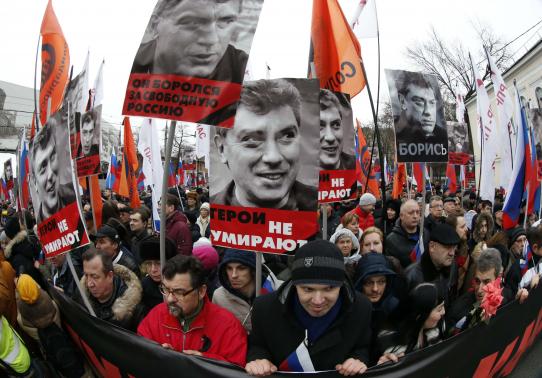 (image: Reuters)
A Wall Street Journal profile at the weekend explains how Nemtsov’s career “traces the arc of Russia’s dimmed hopes for democracy.”
In an exclusive interview with The Telegraph, senior US General Ray Odierno says Britain‘s defense cuts are eroding his country’s confidence in the commitment to global security.
“We have a bilateral agreement between our two countries to work together. It is about having a partner that has very close values and the same goals as we do,” explained Gen Ordorno at the New America Foundation’s “Future of War” conference. “What has changed, though, is the level of capability. In the past we would have a British Army division working alongside an American army division.” The cuts mean that the US military is now working on the basis that in future Britain will contribute only half that amount, if not less.
North Korea apparently fired two short-range missiles into the sea, coinciding with the start of annual US-South Korean military drills, which Pyongyang usually describes as a rehearsal for war.
Nina Pham, the nurse who contracted Ebola while caring for the first person in the US diagnosed with the disease, told the Dallas Morning News she will file a lawsuit on Monday against the hospital’s parent company, alleging that the hospital’s lack of training and proper equipment and violations of her privacy made her “a symbol of corporate neglect — a casualty of a hospital system’s failure to prepare for a known and impending medical crisis.”
* POLITICS * Ken Vogel at Politico looks at the recent goings on at the Clinton Foundation and what it all means for a possible Hillary Clinton candidacy.
“In many ways, what played out over the last two years at the foundation was the story of Chelsea Clinton’s rise. Her power now at the foundation cannot be overstated, according to sources with knowledge of its workings, who say no major decisions occur without her input. Now 35 and with the official title of vice chair at the foundation, Chelsea Clinton is expected to be a key adviser to her mother in the presidential campaign.”
* MEDIA * The Mobile World Congress gets under way in Barcelona on Monday but visitors at press day got an early look at the new Samsung Galaxy S6 and S6 edge phones as well as some other innovative new products – CNet has a rundown of what was unveiled, while Engadget will also have live coverage for the rest of the week.
Lord Hall, BBC Director-General, will appeal on Monday for an extension of the license fee, after MPs last week concluded that the £145.50 ($224) annual fee was becoming harder to justify. The FT reports that one of the key proposals is for increased personalization.
“The potential is huge to let our audience become schedulers,” Lord Hall will say. “This is the start of a real transformation — the ‘my BBC’ revolution.”
* BUSINESS * China’s central bank cut its benchmark one-year lending rate by 25 basis points to 5.35 per cent. It was the second cut in three months.
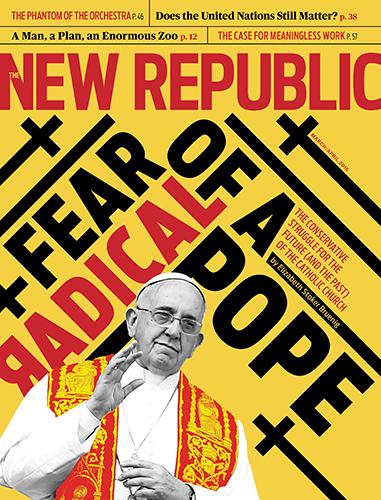
Pope Francis launched a fresh attack on economic injustice at the weekend. Meanwhile, in an excellent cover story in the latest New Republic, Elizabeth Stoker Bruenig looks at how the Pope is working to modernize the church and the opposition he is encountering from American conservatives.
Frustrated Iranian airline passengers have taken to spontaneous on-board sit-ins, in protest at what they see as declining levels of service.
* SPORTS * Finally, Minnie Minoso, the “Cuban Comet,” and the first black Latin player in Major League Baseball, died, aged 90. The Chicago White Sox legend is one of only two players to appear in a major league game in five different decades; yet was passed over by the Hall of Fame. CBS Sports‘ Dayn Perry remembers “a towering figure for Hispanic ballplayers in the post-Jackie Robinson era.”
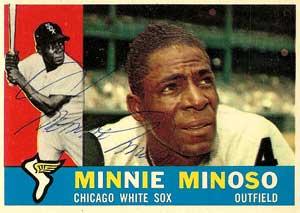
(image: Baseball Almanac)
“For Minnie, every day was a reason to smile, and he would want us all to remember him that way, smiling at a ballgame,” Minoso’s family said in a statement released by the team. “As he so often said, ‘God Bless you, my friends.’”
 The Overnight Note